
Cessna Citation Excel
About
The Original Midsize Game-Changer
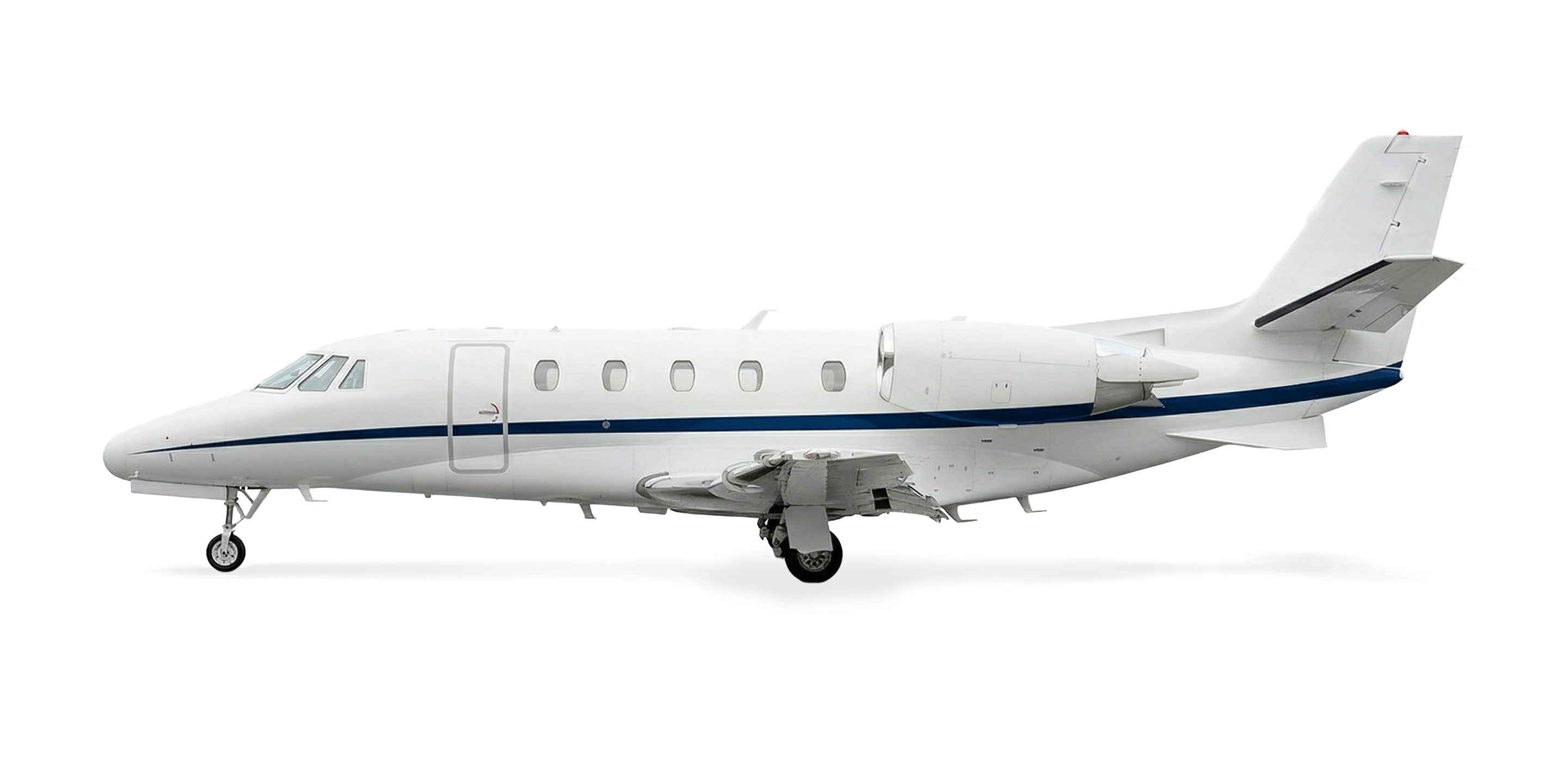
The Cessna Citation Excel marked a pivotal shift in business aviation when it entered service in the late 1990s. Cessna combined a wide-cabin cross-section derived from the Cessna Citation VII with a new wing optimized for efficiency and runway performance, creating an aircraft that didn’t fit neatly into existing categories.
The result was a jet that offered near-midsize cabin comfort with operating economics closer to the light jet class. It quickly became one of the most successful business jet introductions of its era, effectively defining a new segment focused on cabin experience as much as performance.
The Value Proposition of the Excel
Operators are drawn to the Cessna Citation Excel because of its balance. It delivers a wide cabin with stand-up height in the aisle—made possible by a dropped floor design—features typically associated with larger and more expensive aircraft. At the same time, its systems and design philosophy remain rooted in the simplicity that made earlier Citation models so popular.
For missions in the 2–3 hour range, the Excel hits a practical sweet spot: enough cabin volume to keep passengers comfortable, without the step-up in cost and complexity that comes with larger midsize jets. Its operating costs sit between light and midsize categories, but closer to the former, making it an efficient platform for high-frequency regional travel.
Performance and Cabin Utility
The Citation Excel remains a favorite for regional travel, offering a spacious interior that belies its light-jet efficiency. It accommodates up to nine passengers in a cabin featuring a dropped aisle for extra headroom and a full refreshment center. Powered by two Pratt & Whitney PW545A engines, the Excel cruises at 430 knots with a range of around 1,650 nautical miles. Equipped with the Honeywell Primus 1000 avionics suite, it offers a simplified, pilot-friendly cockpit that has proven its reliability over millions of flight hours.


